
The Loneliest Book I Read This Year
Blazing Reader,
After a favourable start with Monday's post, today I'm going to hack away at what I didn't like about Ray Nayler's cybernetic political thriller Where the Axe is Buried...
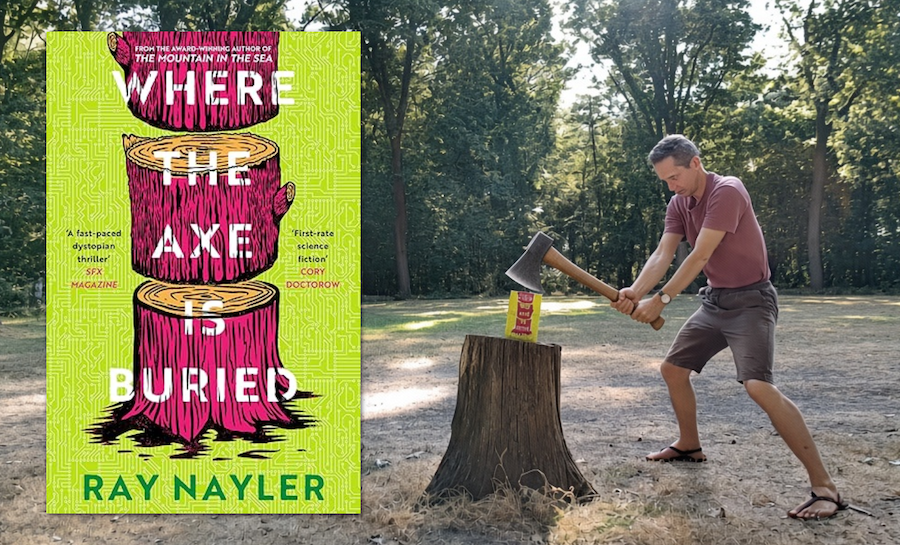
This is a dystopian story about collapse and revolution. Don't go in expecting many laughs. The whole novel has a depressing tone filled with lonely characters — who get even lonelier (save one) as the pages turn:
"She cared too much, and that care destroyed them both. That was how it worked in this country. The ones who cared too much were destroyed by throwing caution away. The only way to survive was to be indifferent to others. Other people could not be allowed to matter."
Not that any of the characters had much chance to care about others — as they spend most of the book in some form of isolation or another — either on the run, hiding out or imprisoned. Due to their isolation, chapters are filled with passive third-person internal dialogue but little external dialogue. The story lacks the level of interaction with other beings (human, robot or otherwise) that I won't say is essential to a story, but certainly my personal preference.
Furthermore, when the characters did have extended periods of interaction with other human beings, it was often summarized rather than played out.
For example, one of my favourite parts of the novel is when a parliamentary bureaucrat becomes a true "public servant" after the AI-run government collapses civilization. But, sadly, this section of the story — full of human interaction — was largely summarized into a well-crafted but insufficient paragraph:
"Nurlan had done many things. He had reinforced barricades, moved dead self-driving cars out of the street, boarded over broken windows, administered first aid. He had buried bodies in the parks, cleaned glass from the streets, stood watch while children played at a playground. He had helped bake bread, and carried warm stacks of it wrapped in cloth up and down the staircases of the local apartment buildings, where it was snatched out of his hands by fiercely hungry children or taken gratefully into the gnarled hands of elders who tried to force him to drink tea with them, or who pressed a jar of jam preserves into his hands in thanks. He helped the elders, like Chinar, to do the small things they could not do anymore. And he had helped with so many other things. At night he came home exhausted and slept well."
I would have loved to have seen that "outline" fleshed out into a few chapters. The entire book, in my opinion, would have benefited from twice as many pages.
On Friday, I'll share why I was so happy with the satisfying plotline, articulate philosophy and intriguing world in Where the Axe is Buried, even if its lonely characters and sparse dialogue left me feeling a little depressed about dystopian thrillers.
John C.A. Manley
P.S. Yes, these photos are real (taken in the woods on the edge of the Dutch village I live in), but the axe is AI slop chop...
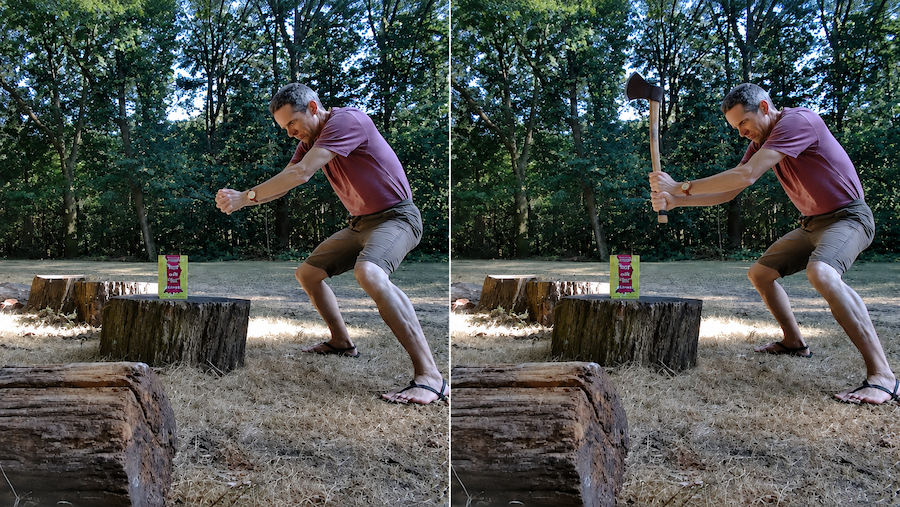
P.P.S. No paperbacks were hurt in the making of this post.
P.P.P.S. You can read part one of my review of Ray Nayler's near-future science fiction here: Robot chops wood with the ease of a girl jumping rope
 John C. A. Manley is the author of Much Ado About Corona, All The Humans Are Sleeping and other works of philosophical fiction that are "so completely engaging that you find yourself alternately laughing, gasping, hanging on for dear life." Get free samples of his stories by becoming a Blazing Pine Cone email subscriber.
